


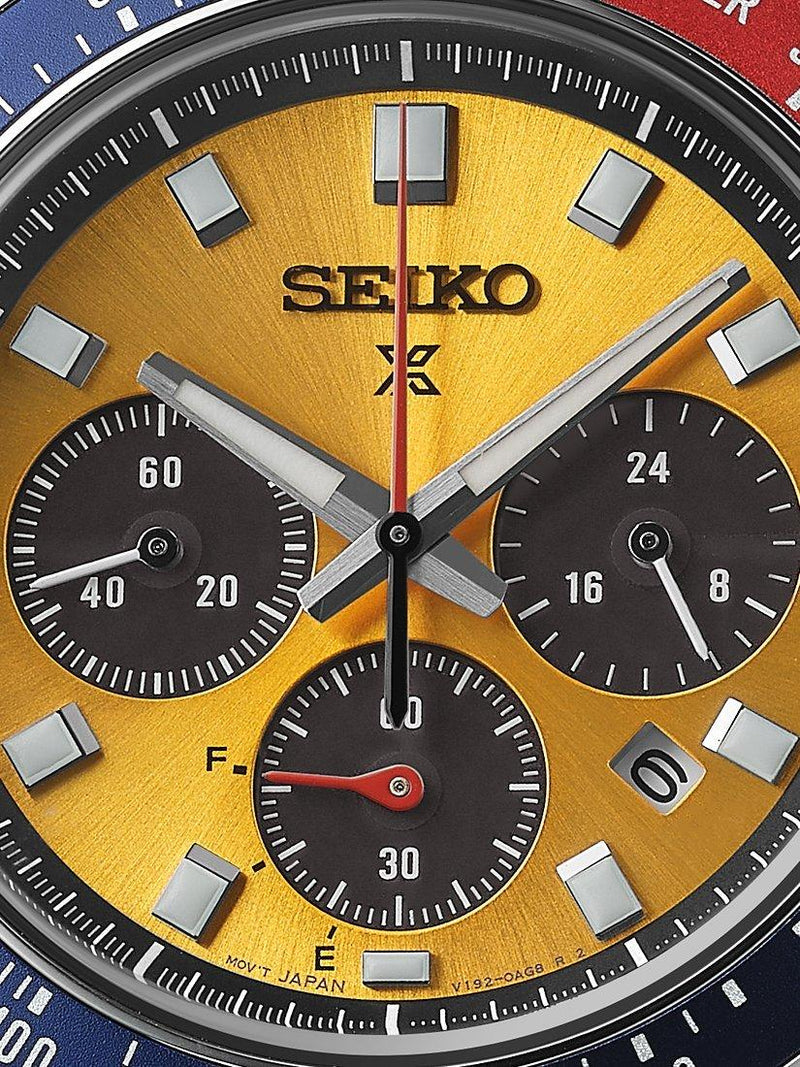

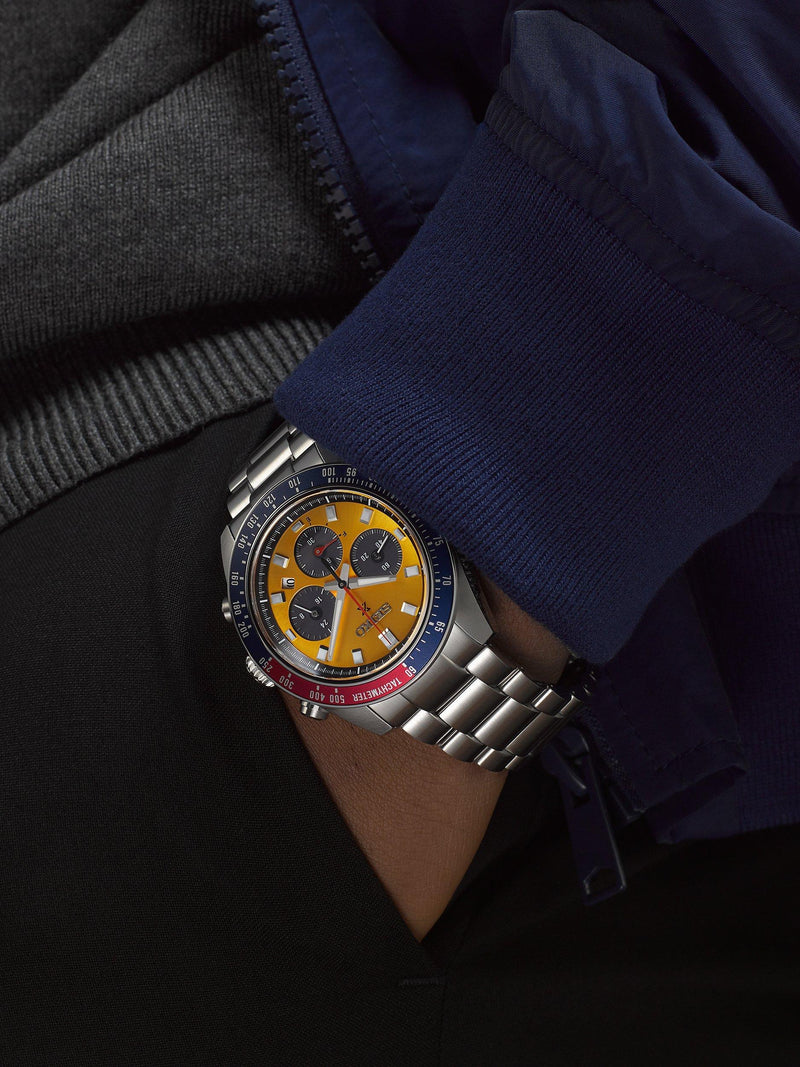


Solar-powered with a 6-month power reserve, this Seiko Prospex Pogue chronograph reimagines the iconic 1969 watch worn in space. The vivid yellow dial and blue-red bezel capture the original design while modern LumiBrite ensures legibility.
In 1969, Seiko released the world's first automatic chronograph equipped with both vertical clutch and column wheel, known as the Seiko Speedtimer. One piece from the first 6139 Speedtimer series rose to stardom as the first automatic chronograph to travel in space: in the 70s, NASA astronaut Colonel William Pogue took the original chronograph on a mission to Skylab - the first US space station. The watch became nicknamed the 'Pogue' after its star explorer wearer.
Under a curved sapphire crystal glass is a vivid yellow dial, characteristic of the 6139 original. Accurately recreating the 'Pogue,' the second hand, and subdial minute hand at 6 o'clock are in a bright red. With 12 spots of Lumibrite across each of the wide vintage-style indices, this Speedtimer is designed for legibility in dark conditions. In the style of the original, this piece has a blue and red aluminium bezel with a tachymeter feature and a chronometer second scale on the inside dial ring. The bracelet is tapered from the lugs all the way to the buckle. This modern recreation features a V192 solar chronograph calibre which charges in both natural and artificial light. Accurate to +/- 15 seconds per month, it has a power reserve of 6 months at full charge.
| Movement | Automatic or self-winding |
| Calibre | V192 solar chronograph |
| Country of origin | China |
| Shape | Round |
| Water resistant | 30m |
| Watch type | Premium |
| Strap material | Metal |
| Strap colour | Silver |
| Watch face colour | Yellow |
| NFC enabled | No |
| Composition | Stainless steel |
| Finish | Polished |
| Model name / number | SSC947P1 |
| Manufacturer's warranty | 3 years |



