
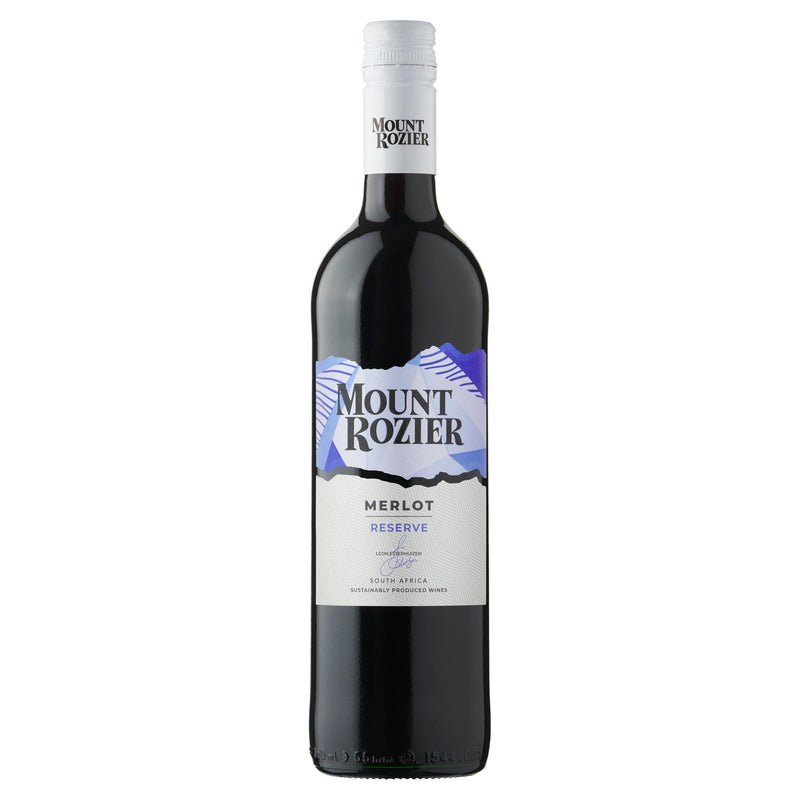


The Mount Rozier Merlot Reserve is a South African red wine bursting with vibrant red and dark fruit flavours, including juicy strawberry and plum with a hint of violet. This easy-drinking drop is sustainably produced by a trusted winery, perfect with lasagne, stews, or mushroom dishes.
This product is not for sale to people under the ages: 18 years (UK and EU), 21 years (USA) etc. By placing an order, you confirm that you meet the legal drinking age requirement in your country. To confirm that the recipient meets the legal drinking age to purchase alcohol, a valid photographic ID with his/her date of birth is required prior to delivery. If this identification is not provided, the alcohol will be returned at your expense. See our Shipping Policy and Terms of Service for further information.
Sustainably Produced Wines
Our Merlot is bursting with vibrant red and dark fruits. Juicy strawberry and plum flavours, with a hint of violet, jump out of the glass to make this a very easy drinking drop.
Nestled in the foothills of the Hottentot Mountains, Mount Rozier winery is a buzzing paradise, with beautiful views and delicious wines. Our Reserve range has been carefully created so you can enjoy a taste of South Africa with friends and family. Sustainably produced by Mount Rozier
Nutrition per 100ml: 317kJ/76kcal
Dietary Information Allergy Advice: Contains Sulphites
Manufacturer Bottled by: W1743, CH2 4LF, UK.
Preparation Great with lasagne, stews and mushroom based dishes.
Country of Origin Country of origin: South Africa
Packaging Glass Bottle
Alcohol Alcohol by volume: 12.5%. Alcoholic content: 9.4 units
Region of origin Western Cape
Grape variety Merlot. Wine colour Red. Type of closure Screwcap
Storage instructions This wine is ideal for drinking now but can be kept for up to 2 years
History Purchased by the Gabb family in 2009, Mount Rozier was founded at the turn of the 19th century by Annie Rozier, a flower merchant. She picked wildflowers in the Schapenberg hills surrounding her family's homestead and famously, she also produced natural remedies and medicines for the local community. In the 1920s, the Stellebosch-based estate formed part of Myrtle Grove, where the first ever commercial plantings of Pinotage were grown in 1941 by Professor Perold.
Regional information Vineyards are located in Worcester and Riebeeck Kasteel. Both areas areas has warm and dry summers and medium rainfall in the cold winters, these conditions are very good for producing good structures wines. Vineyards are planted at a altitude of 120 m to about 220 m above sea level. Decomposed granite soils prevent water logging and add minerality whilst the valley floors have pockets of higher clay content with excellent water-retention properties.
Vinification All bunches were carefully selected and sorted before the whole berries were transferred into stainless steel tanks for fermentation. After a 3-day cold soak the tanks were inoculated with a specific yeast to start the fermentation. During fermentation 2 pump overs per day were conducted to extract enough fruit, colour and tannins for the final wine. After a 14-day fermentation the tanks were pressed. Only post malolactic fermentation the components were blended together to be bottled.



