


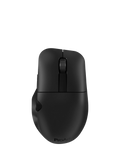


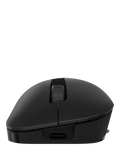


The ASUS ProArt MD300 is a professional wireless mouse designed for creators. It features the innovative ASUS Dial for precise settings adjustments in creative software. Use it to zoom, adjust brush size, and perform other functions in Adobe applications.
ASUS ProArt Mouse MD300 is the first mouse that works with ASUS Dial, allowing creators to make quick and precise settings adjustments. ASUS Dial scrolls through 100 lines per revolution and lasts 5X longer than traditional mouse scrolls. The grease layer in the dial wheel holder ensures smooth and stable scrolling, providing an impeccable user experience.
This premium mouse also features a side scroll wheel and three buttons with professional-grade switches. All three mouse buttons utilise pro-grade switches that are rated for up to a 50-million-click lifespan and provide satisfyingly tactile feedback with each click.
ProArt Mouse MD300 has a high-performance sensor that tracks at up to 4200 dpi for unmatched precision, even when used on a glass surface. With a polling rate of up to 1000Hz, lag is kept to a minimum for smooth, accurate control. The pivoted buttons mechanism leaves no gap between the button and switch, so the click response is instantaneous and consistent. Plus, the low-friction PTFE mouse feet offers a smooth glide.
ProArt Mouse MD300 stays powered for up to 150 days on a full charge - and gets up to 3 hours of heavy use or up to 8 hours of light use from a one-minute quick charge. Use the included USB-C charging cable to top up the power.
ProArt Mouse works seamlessly with Adobe software such as Photoshop, Premiere Pro, After Effects and Lightroom Classic. Users can fully customise key assignments to improve productivity using the ASUS Dial - to easily and quickly change brush size, zoom in and out, or perform other functions.
Moreover, the ergonomic design of the palm grip offers a comfortable grip for long-duration operations, and an elegant silhouette. The thumb rest area cushions the thumb into the side of the mouse, relying on forearm muscles instead of wrist tendons for support.



